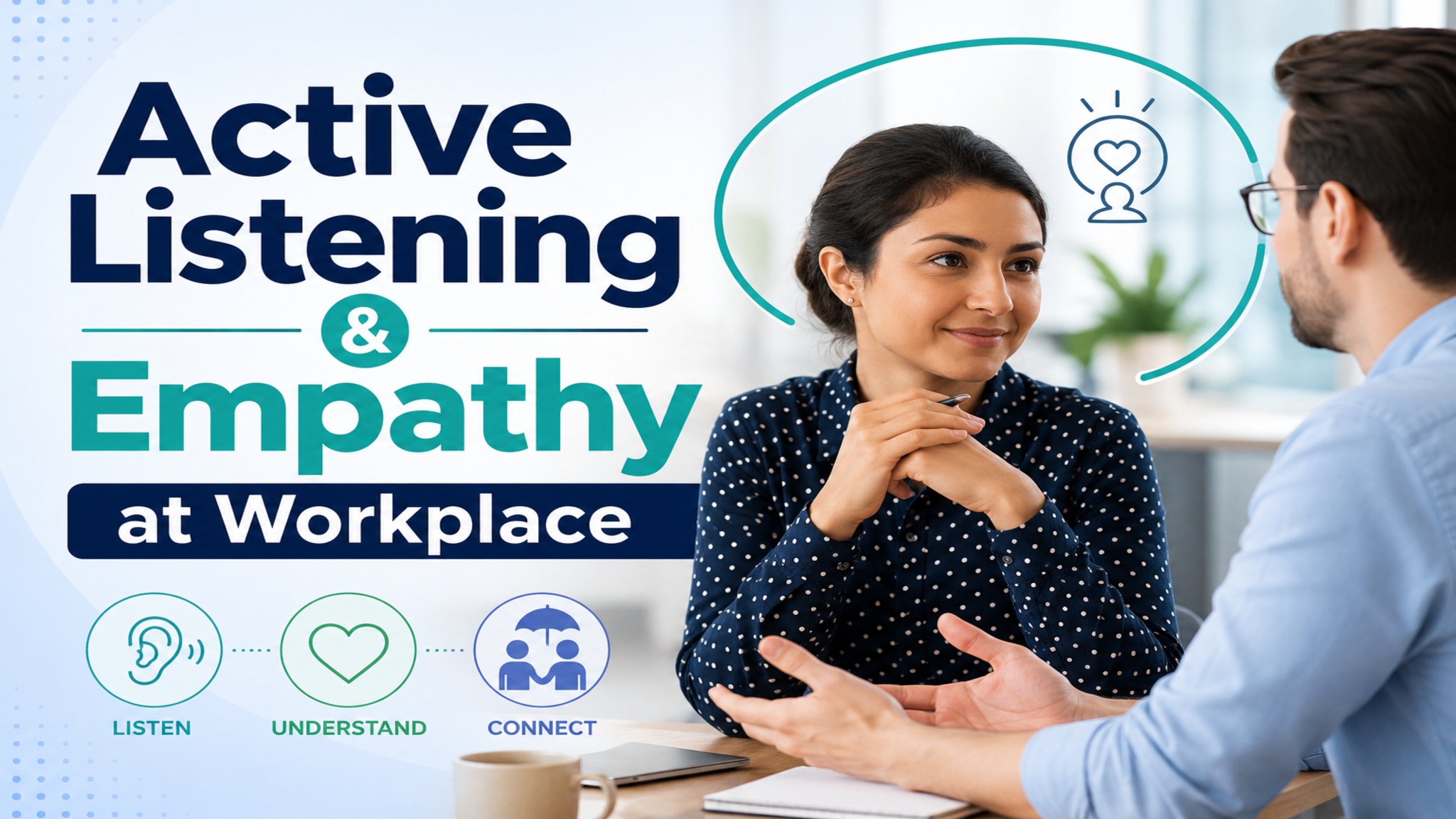
Effective workplace communication is not just about exchanging information—it is about understanding people, building trust, and creating meaningful professional relationships. This course is designed to help professionals develop two of the most essential workplace competencies: Active Listening and Empathy.
In today's fast-paced work environment, misunderstandings, communication gaps, and workplace conflicts often arise not because people fail to speak, but because they fail to truly listen and understand. Active listening enables professionals to fully focus on conversations, interpret messages accurately, and respond thoughtfully. Empathy complements this skill by helping individuals understand different perspectives, recognize emotions, and communicate with greater awareness and respect.
Through practical workplace-focused learning, participants will explore the foundations of active listening, including attention management, clarification techniques, non-verbal communication, emotional control, and effective feedback. The course also examines empathy as a professional skill, covering cognitive empathy, emotional empathy, perspective-taking, emotional awareness, and empathetic leadership practices.
Learners will discover how these skills can be applied in everyday workplace situations, including team collaboration, performance discussions, coaching conversations, customer interactions, virtual communication, conflict resolution, and decision-making processes. The course provides practical guidance on how active listening and empathy improve communication quality, strengthen professional relationships, and enhance workplace productivity.
Participants will also examine common barriers that limit effective listening and empathy, such as distractions, assumptions, emotional reactions, selective listening, cultural differences, and lack of patience. Strategies to overcome these challenges are explored to help learners build more productive communication habits.
A key focus of the course is understanding how organizations can foster a culture of listening and empathy. Learners will explore the role of leadership, feedback systems, employee engagement, psychological safety, and communication practices in creating an environment where employees feel heard, respected, and valued.
By the end of this course, learners will be able to listen with greater intent, communicate with empathy, manage workplace interactions more effectively, and contribute to a more collaborative, respectful, and high-performing work environment. These skills are valuable for employees, managers, team leaders, customer-facing professionals, and anyone seeking to improve workplace relationships and communication effectiveness.